The Kids are Alright
Communion in the age of Intelligence

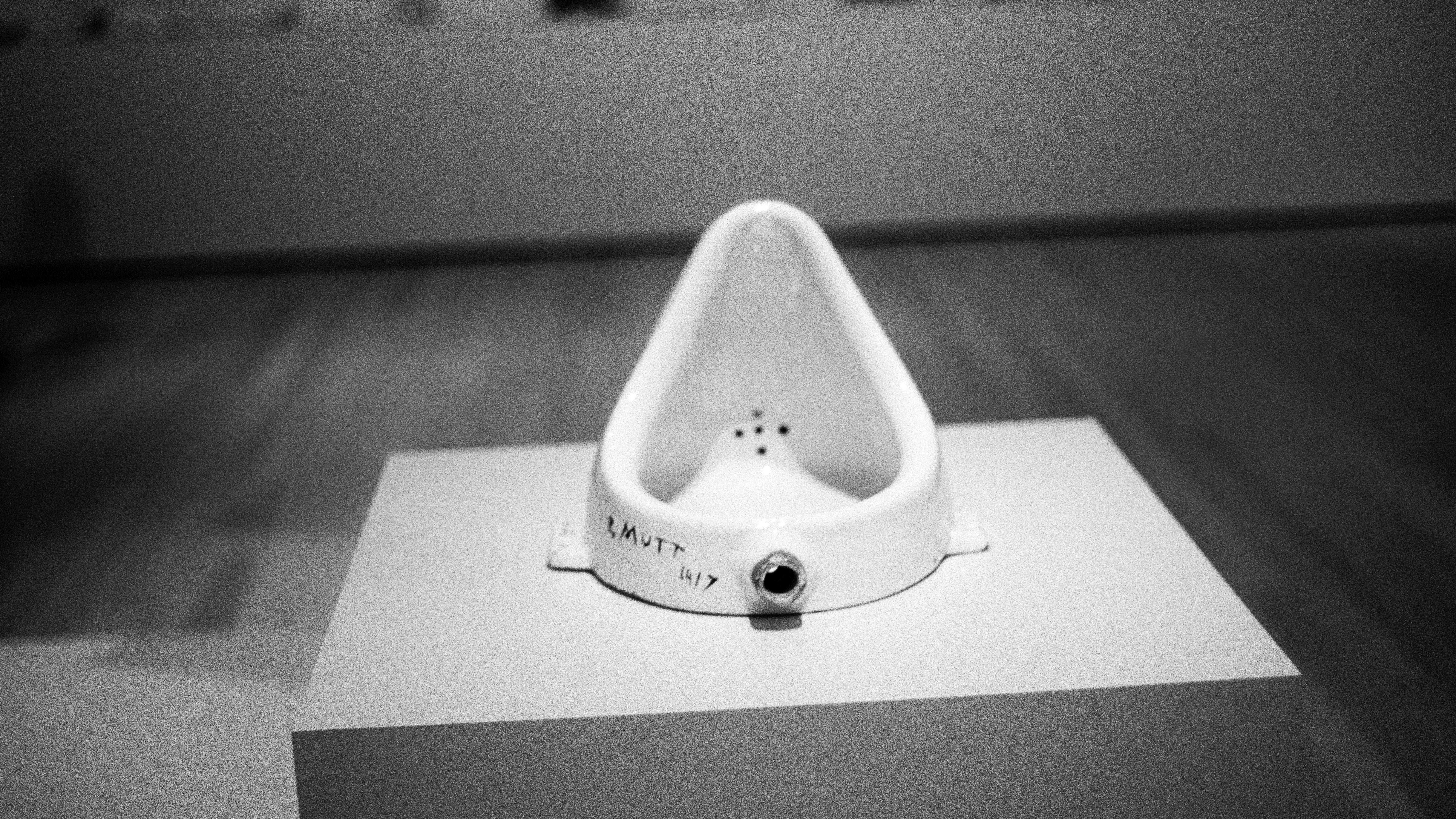
It’s nearly impossible to teach the philosophy of art without discussing Marcel Duchamp’s Fountain. The mythical origins of the work are disputed, but what we know for sure is that Duchamp did not create the object that is Fountain; it is an ordinary urinal produced by an ordinary urinal factory. “R. Mutt, 1917” was written sloppily on its side. What Duchamp undoubtedly did do was submit it to the First Annual Exhibition of the Society of Independent Artists, an exhibition that claimed it would show anything—any art, at least.
Duchamp could not have dreamed of a better reaction from the organizers; they rejected the work on the grounds that it is not art and thus ineligible. Ironically, Duchamp himself was on the board, and was in charge of hanging the entire exhibition. He used the unusual—and hated—method of hanging things in alphabetical order according to the artist’s last name. When the other organizer’s rejected Fountain, he resigned from the board. The exhibition was disliked, but most of the complaining was about the way it was hung. Fountain was not the subject of intense critical debate. The physical object disappeared before the show closed, never to be seen again.
Fountain seems to be a real life philosophical thought experiment. Can a random ordinary object be a work of art—become a work of art? Yes, at least eventually. Can it be good art? Yes, at least potentially. To use Arthur Danto’s phrase, Fountain shows that the commonplace can be transfigured into art.
The how of this is less clear. Was that urinal a work of art when it disappeared without much notice? If so, why? Just because Duchamp said so? Eventually everyone agreed that it was a work of art. In fact, its fame was widespread enough that two other urinals started going by the name, endorsed by Duchamp (one of them, from 1950, is a Parisian urinal; it’s in my photograph above), not to mention a series of eight ‘replicas’ that were handcrafted by Italian artisans. These facts do not help with the how question.
I get ahead of myself. I am a teacher of the philosophy of art, which makes me a humanities teacher; indeed, I also write in the humanities, making me something even murkier—a humanist. When I described myself as such recently to one of my children, her reaction was telling: <eyebrow raised> “What’s that?”
It’s clear that many of my students are as ignorant as my kid. Of course, they were all subjected to English and History class, and the endless worksheets those entail. They were told to write paragraphs with 20 sentences, no exceptions, with at least five quotes and ‘furthermore’s; they have some vague idea that in some sense there is something other than science and math; and, if they are socio-economically lucky, they will think that the most important thing they can do as a teenager is to learn calculus. Otherwise they will not survive their college’s mathematics department trying to get them to fail.
Universities don’t help matters all that much. The overarching message given out by universities about their mission is, basically, that they are knowledge factories. The suggestion, whether implicit or not, is that there is a knowledge bucket that we are aiming to fill, one knowledge-nugget at a time.
This is not a bad way of thinking about the organization and ideals of science, but it’s harder to square for the humanists. When my students show up for the first day, I cannot promise them any particular knowledge-nuggets, although they will acquire some of them. Which ones they acquire will be up to them, will be a matter of their own thinking. Unlike most courses in the sciences, there is not a set of claims that they have come to absorb. Science’s ideal result is a textbook. Not so for the humanities.
How to be lonely while constantly being surrounded by the realities of other people: Live in the modern world. I can spend my whole day in my house but still see what’s going on all across the globe. As I sleep, updates pile up on my phone like plastic washed ashore during high tide. And yet, there is no guarantee of recognition or understanding. In fact, the system that connects me to the globe discourages recognition, seeing me, you, all of us, as mere nexuses of data packets, requiring more and more compute.
All of this now seems to be moving at hyper-speed. Our politics, seemingly always in decline, have crumbled to near dust. And our economy and, increasingly, our day-to-day existence is being dictated by a fanatical interest in artificial intelligence, establishing a narrative from a bad 1970s Bond: Awkward men paying themselves billions of dollars to produce opaque computer equipment, building giant warehouses in the desert to house them, pumping in millions of gallons of water per day to massage those chips into producing a tedious, hollow, amalgamate impersonation of ourselves. Our alienation only deepens when the world is flooded with faux-intelligence promising to take our jobs and steal our land and water, all in the name of some ill-defined notion of progress.
Despite the new words and platforms, we shouldn’t pretend this is a new problem. We have big brains, and we are destined and doomed to use them. We know that there are others around like us, and we want to know and be known by them. They want the same thing. And yet…
I didn’t travel far from home as a kid. I was often on the move, driving to and from sporting competitions, seeing regional sights. I went on two formative Washington D.C. middle school trips. That was about all.
When I got to college, I took a year long Great Books class, which was my first proper exposure to the humanities. It completely changed my life (yeah, yeah, so cliche). One impact of this was that it led to a desire to travel wider. I signed up for a study abroad trip to eastern Europe, but then I chickened out and cancelled a few months before.
This cowardice subsequently implanted in me a desire to be part of study abroad. This is not so easy in philosophy. As the old joke goes, mathematics is cheap because you just have to provide pencil, paper, and a trash can; philosophy is even cheaper because you don’t have to provide the trash can. Philosophy’s methods do not demand air travel.
But I found my way: A ‘Global Seminar’ about the philosophy of art, oriented around the different functions that art objects can play, with a trip to Italy to look at museums and various religious institutions. The worst that could happen is I get a trip to Italy. Sign me up.
Art is a peculiar institution (as I say in the first sentence of my syllabus). On the one hand, nearly everyone is drawn to some art. Most genuinely love some. On the other hand, it is not obvious why, and the philosophy of art can only make this question more disorienting. It’s hard not to think, What is the point of Fountain? Why would someone gain so much cultural power just by handing over a toilet to some art nerds?
Fair questions, and difficult ones for the teacher of art and its philosophy. This is made more difficult when you are also leading a trip to hallowed ground, when you are promising an experience, when you are hoping for communion.
Mark Twain first became famous not for a novel, but for his satirical travelogue The Innocents Abroad. The book is a send-up of the Grand Tour, what he called his “Great Pleasure Excursion”. It documents his monumental trip through Europe and the Holy Land with a group of fellow Americans. It is (mostly) a story of sightseeing in the shallowest way, of going to places just to say that you’ve been there. Twain is both the comedian and, at least sometimes, the object of the comedy.
Consider what he says about Florence and its paintings:
We wandered through the endless collections of paintings and statues of the Pitti and Ufizzi galleries, of course. I make that statement in self-defense; there let it stop. I could not rest under the imputation that I visited Florence and did not traverse its weary miles of picture galleries.
Immediately preceding this, he says “I think we appreciated the great figure of David in the grand square, and the sculptured group they call the Rape of the Sabines.” He thinks they appreciated them.
Ahead of our trip, this is the group-orientation that I feared the most. I feared that we would trudge, that we would move from place to place because that is what the schedule dictated, glancing at an endless stream of Christian paintings, all of them blurring into one lump of vacant devotional stares. As Twain puts the end result of this process:
We have seen thirteen thousand St. Jeromes, and twenty-two thousand St. Marks, and sixteen thousand St. Matthews, and sixty thousand St. Sebastians, and four million of assorted monks, undesignated, and we feel encouraged to believe that when we have seen some more of these various pictures, and had a larger experience, we shall begin to take an absorbing interest in them like our cultivated countrymen from Amerique.
There are many paths to the trudge. Some of it is purely physical—jet lag, hangovers, sore feet. On the morning of our first full day, we headed to the Uffizi, with two tour guides waiting. We lingered outside for a while as the logistics were sorted. Unbeknownst to us, we had arrived just as the monumental staircase leading to the main galleries—the Scala Lorenese—was being reopened after 8 years of renovation. It was our guide’s first time seeing them in nearly a decade. She was ecstatic. Our brains told our legs that it was the middle of the night and that no stairs were worth this.
We partially bounced away from the Florentine Renaissance after this first collision. The galleries were packed with groups, it was bordering on stuffy, and we were trying to master our headphones, listen to the guide, and avoid running into bored school children all at the same time. There was no doubt that there was beauty all around, and its flash registered. But when I met them at the cafe around lunch, their eyes were glazed.
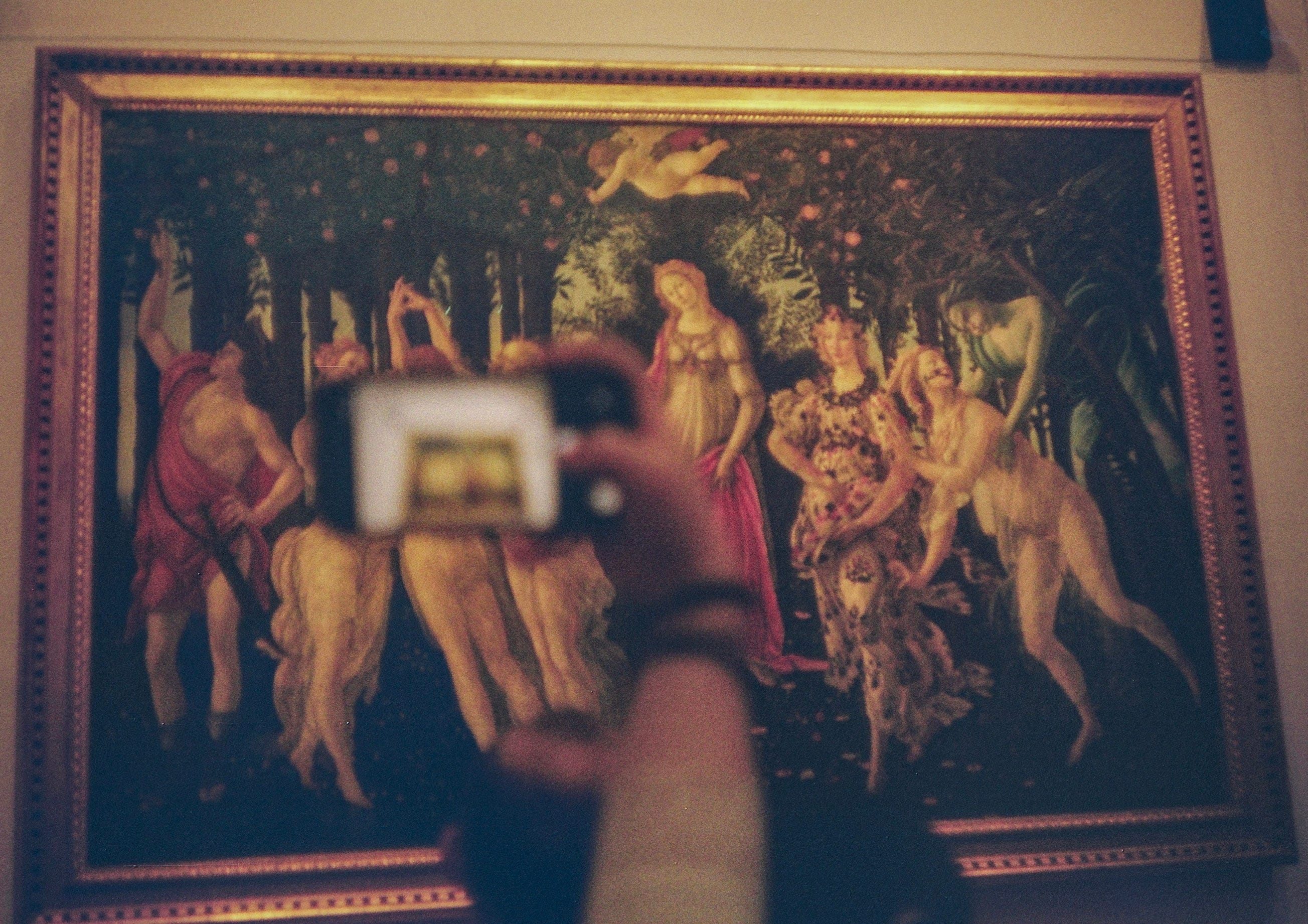
Art is a social institution that is guided by pre-social worldly values. It is a form of communication that is mediated by the aesthetic. This mediation is what explains its wide and deep appeal. Even with someone’s iPhone partially blocking the view, Botticelli’s Primavera is captivating. It stuns you.
Art’s communicative function is often harder to grasp. Many people, including many philosophers, prefer nature’s aesthetic offerings, as they are made simply. They don’t try to tell you anything. They are just there, waiting to be enjoyed. These artists, on the other hand, are trying to talk to you, but in which language?
I predict that this problem of interpretation is the most common reason for the trudge. And, in fact, the beauty of the pictures in those ‘weary miles of picture galleries’ actually makes the problem more frustrating, makes it easier to glaze over. It is almost unfair for Botticelli to stun you like that but to then speak in tongues. How dare you manipulate us like that.
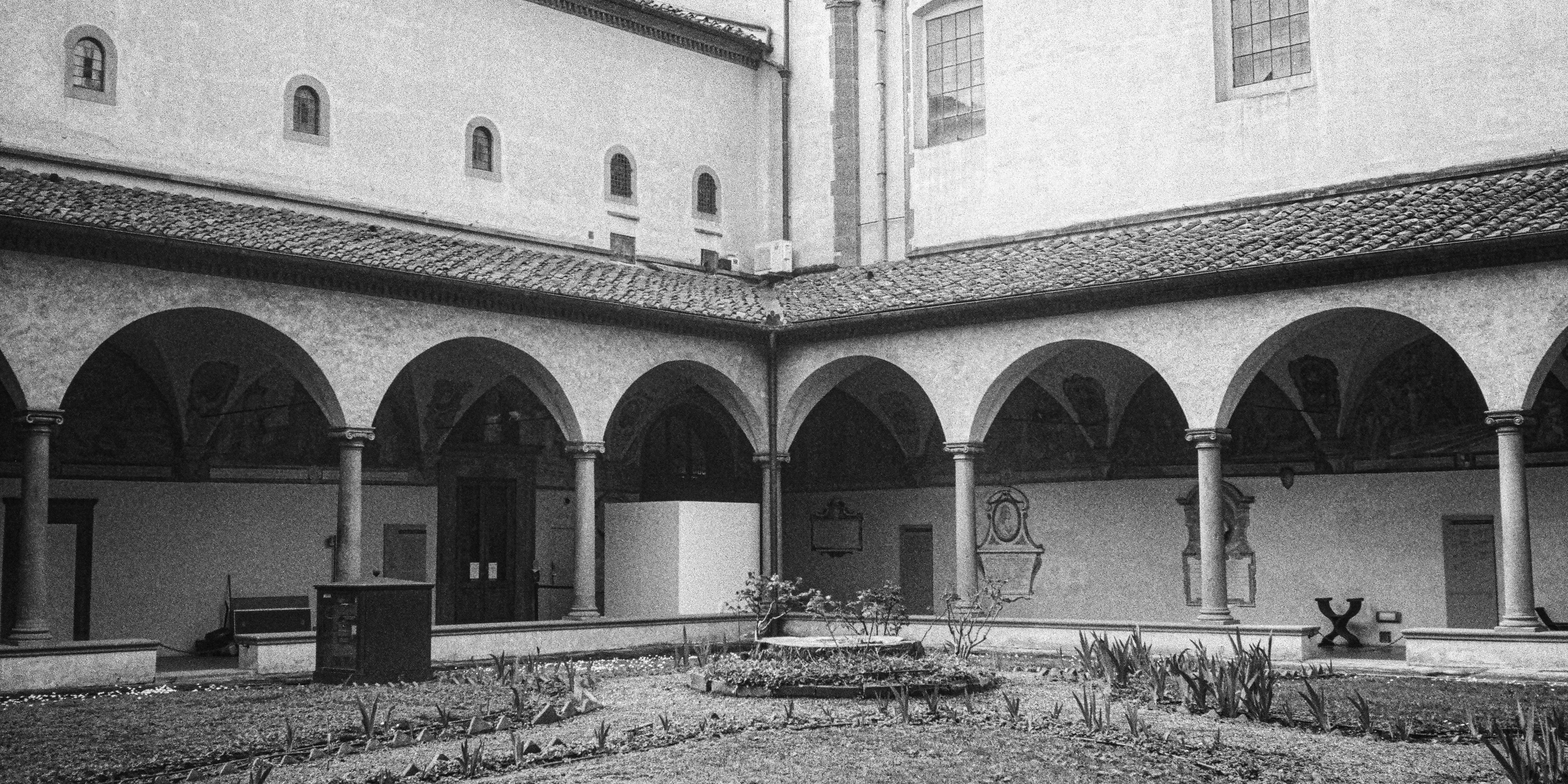
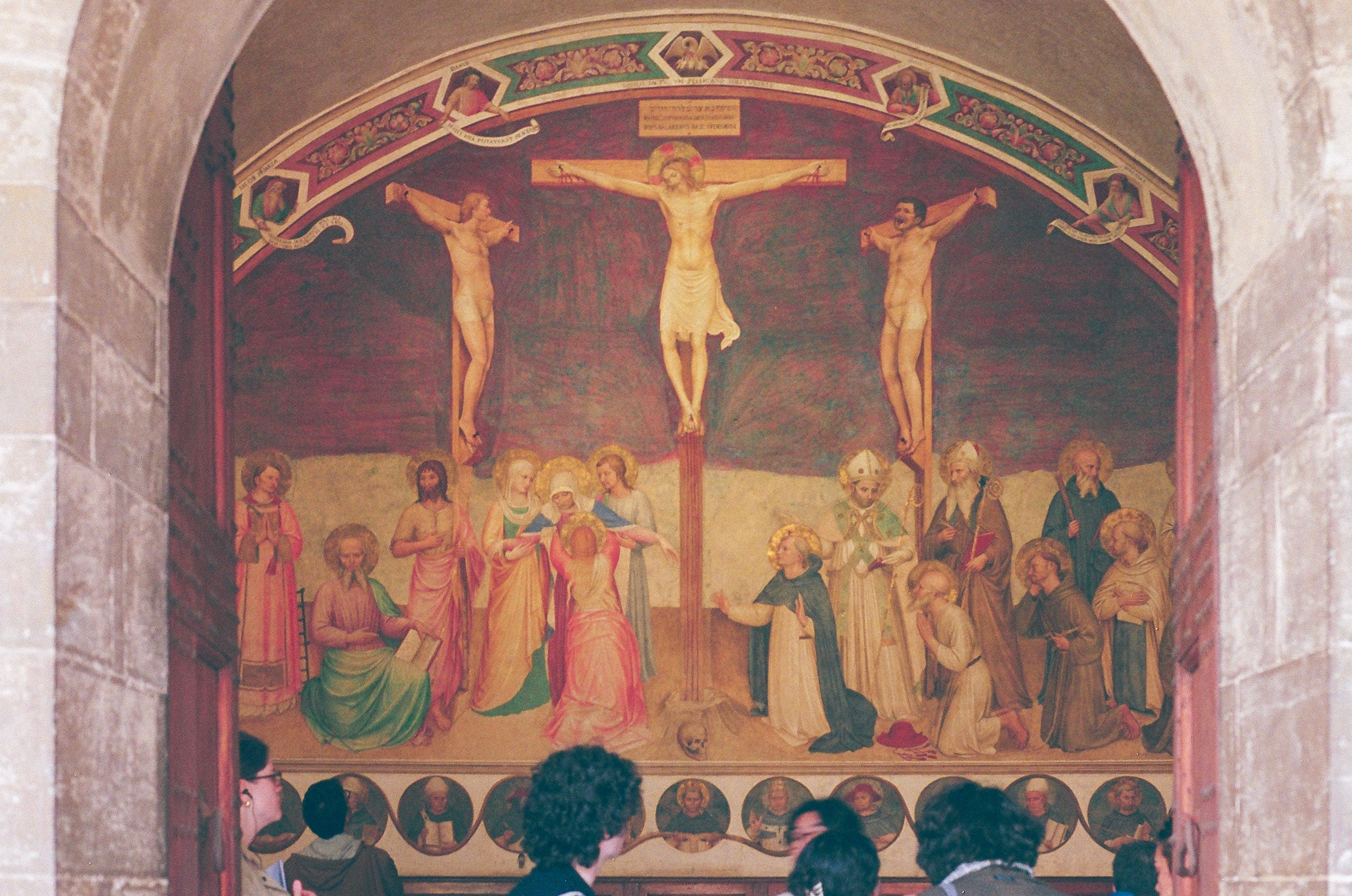
In 1873, Henry James traveled to Florence. One day he went to the ‘secularized Convent of San Marco’, which was decorated in the mid-15th century by Fra Angelico. On the ground floor, directly off of the cloister, is the chapter room. In it is Fra Angelico’s Crucifixion. James ‘looked long’ because ‘after taking in its beauty you feel as little at liberty to go away abruptly as you would to leave church during the sermon.’ He goes on to describe some key parts of the painting,
The three crosses rise high against a strange completely crimson sky, which deepens mysteriously the tragic expression of the scene, though I remain perforce vague as to whether this lurid background be a fine intended piece of symbolism or an effective accident of time…Between the crosses, under no great rigour of composition, are scattered the most exemplary saints—kneeling, praying, weeping, pitying, worshipping…Everything is so real that you feel a vague impatience and almost ask yourself how it was that amid the army of his consecrated servants our Lord was permitted to suffer.
James goes on to say that ‘[Fra Angelico’s] conception of human life was a perpetual sense of sacredly loving and being loved.’ He closes his interpretation of the Crucifixion by claiming that the picture
‘offer[s] an immense representation of Pity, and all with such concentrated truth that his colours here seem dissolved in tears that drop and drop, however softly, through all time.’
The museum is a recent phenomenon. It wasn’t until the 18th century that visual art found a secular home. This movement was spurred by the new proper philosophical field of aesthetics, which was founded on the idea that there is a separate sort of value that demands a special sort of response—in Kant’s famous synthesis of the century, disinterested pleasure. To facilitate such a response (despite Kant’s more complicated relationship to art), we needed a new sort of temple, a temple to beauty.
The modern museum is a victim of its own success. The problem is philosophical. To put a fine point on it: The views about beauty best suited to the idea that (Kantian) disinterest is required to respond to beauty have a very difficult time explaining how it is that art is communicative; but art is communicative. This puts museums in a bind. Their very founding rationalized ripping much of the pictures and sculptures of the world out of their original homes, stripping them of crucial communicative context. But few are willing to go all in on the idea that we can find all that we need within the frame, and so they end up in an unstable middle position, usually with puzzling or infuriating placards.
Communication depends on history. Artistic meaning—the distinctively artistic content that is communicated—thus depends on history. Botticelli could not have made Fountain; he could not have made a urinal into art, or at least not a work of art that has the same meaning as Fountain. And Duchamp could not have been the author of Primavera. He could have made a painting that looked just like it (I mean, with considerably more technical skill than he had), but given Primavera’s impact on the language of visual art and given the fact that Duchamp was not in the communicative context of Botticelli, Duchamp was not in a position to say what Botticelli said.
If this historicism is right, then in order to properly take up the call of Primavera’s beauty, you need to inhabit a communicative context that allows you hear what it is saying; it is hard to know ahead of time which facts might be relevant to this interpretive process. This is not to say that what is inside the frame is irrelevant or trumped by facts outside of it. Facts outside of it need to illuminate what is in it. They need to provide an interpretation of what the picture is saying.
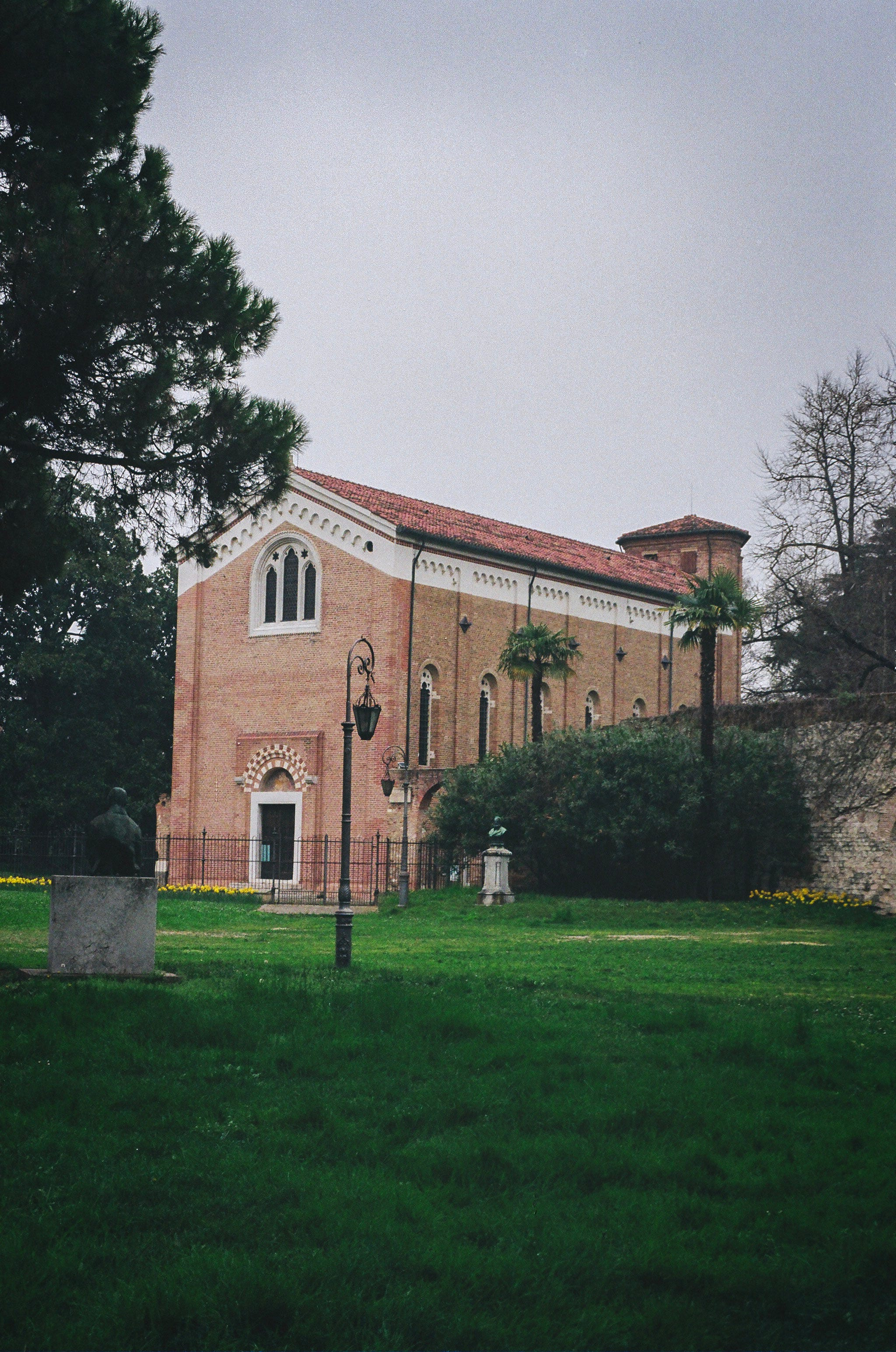
Twenty years before James saw Fra Angelico, John Ruskin made a series of trips to the Scrovegni Chapel in Padua (often called the Arena Chapel since it is built on the site of the old Roman arena). The chapel was built at the beginning of the 14th century by a rich banker for his family’s private use. He hired the best painter in Italy to cover it in frescoes. This painter was Giotto. The main series of frescoes—painted in a snake like temporal procession—charts the story of Christ. This telling, though, is exceptionally ambitious, starting all the way back to when Mary’s father Joachim was exiled for not producing a child.
Giotto’s frescoes at Scrovegni are remarkable for a number of reasons. Unlike Fra Angelico, Giotto did not benefit from the Renaissance’s rediscovery of classical techniques. His pictures are technically simple. Yet they ring with truth. Ruskin famously said that it is impossible copy Giotto, claiming that ‘the grace and life of [the] original [will] continually [fly] off like a vapour, while all the faults he [the copyist] has so diligently copied sit rigidly staring him in the face.’
Perhaps the most moving panel is—supposedly—the first kiss represented in western art. This is a kiss between Mary’s parents when they are reunited at the Golden Gate in Jerusalem (in the meantime an angel has gone to both of them announcing Anne’s pregnancy with Mary). Ruskin describes it as ‘being full of the most solemn grace and tenderness.’
Perhaps Ruskin’s favorite, though, is the nativity, and especially the angels in it.
above, the angels, all exulting, and, as it were, confused with joy, flutter and circle in the air like birds…There is something peculiarly affecting in this disorder of theirs; even angels, as it were, breaking their ranks with wonder, and not knowing how to utter their gladness and passion of praise.
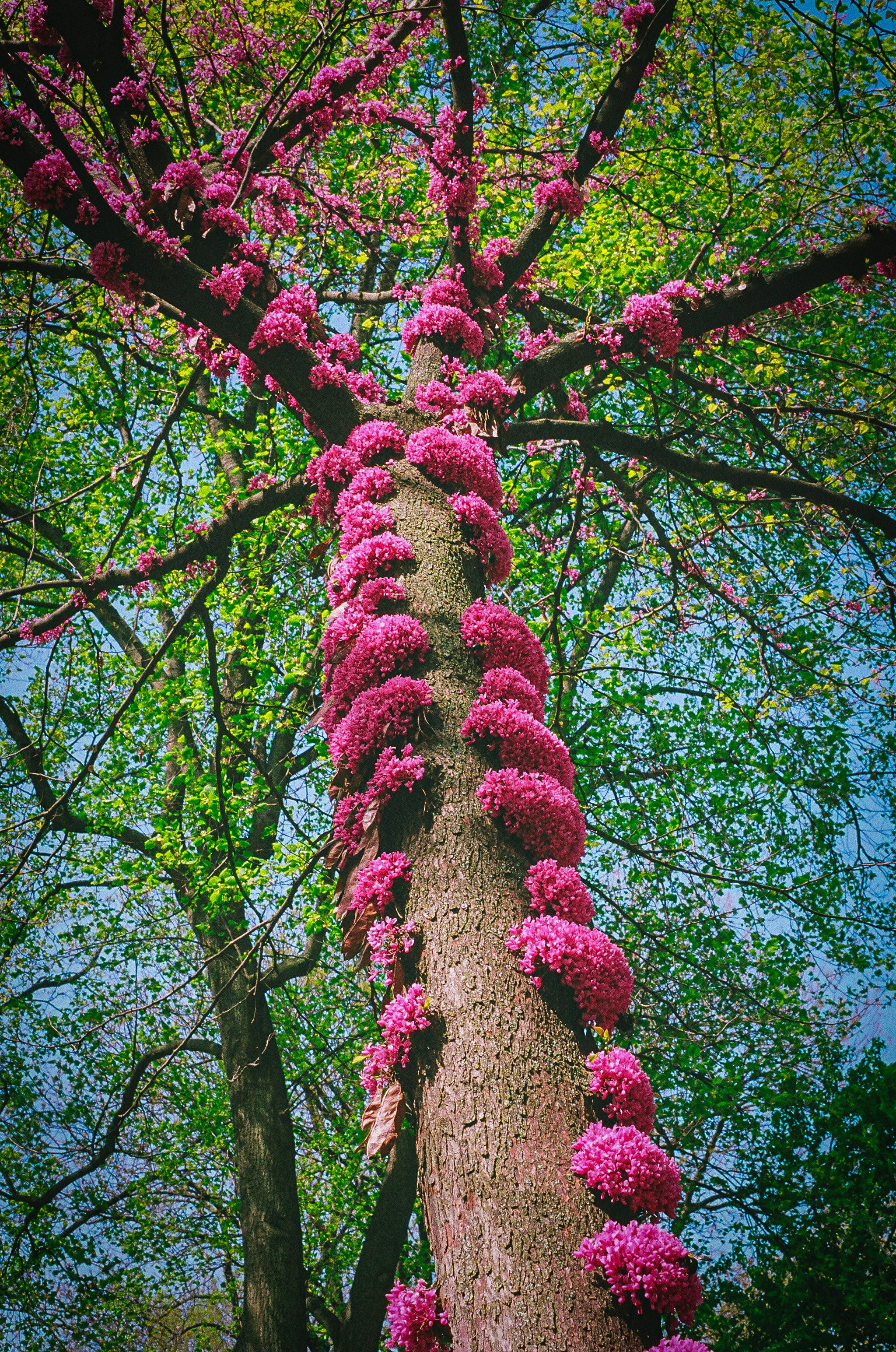
Some of what these pictures are saying is easy enough to learn. We learn from Botticelli’s title that his painting is about spring, we learn from the apocrypha that Joachim and Anne met at the Golden Gate (at least according to the story), we learn from television what a kiss looks like.
But some of what pictures are saying—and this part is especially important—cannot be so easily gleaned. James knows that the Crucifixion depicts Jesus’ death on the cross from cultural facts easily available to him, but to get to the conclusion that is ‘an immense representation of Pity’ requires something more. Similarly, Ruskin can immediately see that the Nativity depicts angels; it takes something more for him to learn that they are ‘confused with joy’ and ‘flutter and circle in the air like birds.’
What James and Ruskin are providing are interpretations—theories about what these pictures say. To do that, they have to exercise judgment; in this case, this is often—again, with Kantian influence—glossed as taste. James and Ruskin (and you and I) all have a faculty that gives us the capacity to interpret. The most interesting objects that we use this capacity to investigate are deeply ambiguous. Their meaning is not mechanical.
In fact, many of the objects will not be explicable in terms of ordinary, literal language. This is why metaphor, and thus poetry, is central to the exercise of judgment. It is no accident that James says Fra Angelico’s colors are ‘dissolved in tears that drop and drop, however softly, through all time.’ There is no way of literally saying what Fra Angelico’s fresco is saying. It is saying something beyond the reach of prosaic language, which is why James must reach for the poetic. It doesn’t just say, it sings.
To hear what these pictures are saying, then, requires the use of judgment. To engage with them most fully requires interpreting them. And given the nature of some of what they are saying, this requires an appeal to the poetic. To grasp the metaphorical content is an achievement, one that puts you into contact with a scores of people across centuries, including the painters themselves. To hear them is to know them, and, at least in these cases, to love them.
One of the important functions of art is the communication of this sort of metaphorical content (it is on this topic that Kant is his most enlightening on art). This is so both because it allows us to develop our capacity for judgment, but also because it allows for a sort of communion. It is miraculous that I can be in communication with painters from 500+ years ago, that I can have a sort of conversation with them and with their other interpreters from 200 years ago (or from March 2026, for that matter), that their long finished labor can reveal something to me now.
But don’t be misled. Our capacity for judgment extends well beyond art. The world is ambiguous, and it thus requires interpretation. A humanistic education is an education in judgment. To be a humanist is to engage in interpretative inquiry, whether it be the interpretation of art, language, ethics, history, metaphysics, or theology. Since all human life will involve the exercise of judgment (unlike, say, the use of calculus), every single human has interests served by a humanistic education.
(Since you’ve made this far, indulge me in some metaphysical speculation.)
Some parts of the world are not ambiguous in the ways that call for judgment. These parts of the world are the parts most amenable to science. Although plausibly judgment is always exercised at the limits of current science, science aims to eliminate the need for judgment; its laws are (ideally) absolute—with the right inputs you always get the same outputs. This is why its ideal pedagogical tool is the textbook, the compendium of laws to be memorized and then mastered.
Other parts of the world are essentially ambiguous in the way that calls for judgment. These parts of the world are least amenable to science. Their ideal pedagogical tool is not the textbook. To fully engage with these parts of the world requires the use of your own judgment. They are the exclusive purview of the humanities, and they are largely where our humanity lies. To fully develop our humanity, we have to exercise and train our capacity for judgment. To commune with others, we have to use it.
It is easy to be skeptical, especially in the modern world. Ours is a world of linear scientific and economic progression, a world discovered by our labs and participated in for the sake of capital. And we wonder about our alienation!
Even from the inside it is easy to be skeptical. You are there in front of the Crucifixion, overcome with the atmosphere of it. You feel like it is telling you something, but prosaic language fails you. If there is anything there, it requires special description—music. So perhaps you are making it up. Perhaps you are just desperate, reaching for some spiritual truth that was never there. Perhaps you should own up to your own isolation and get back to work.
The Uffizi was the only modern museum we visited. After some coffee and sandwiches, the glaze receded from our eyes. Much pleasure was had in the afternoon. But this paled in comparison to what was to come. The apotheosis came in a 24 hour period about half way through the trip. On our last day in Florence, we went to see Fra Angelico in San Marco. The sun was out, the air a bit chill but with the promise of warmth. Inside the complex it was quiet and peaceful.
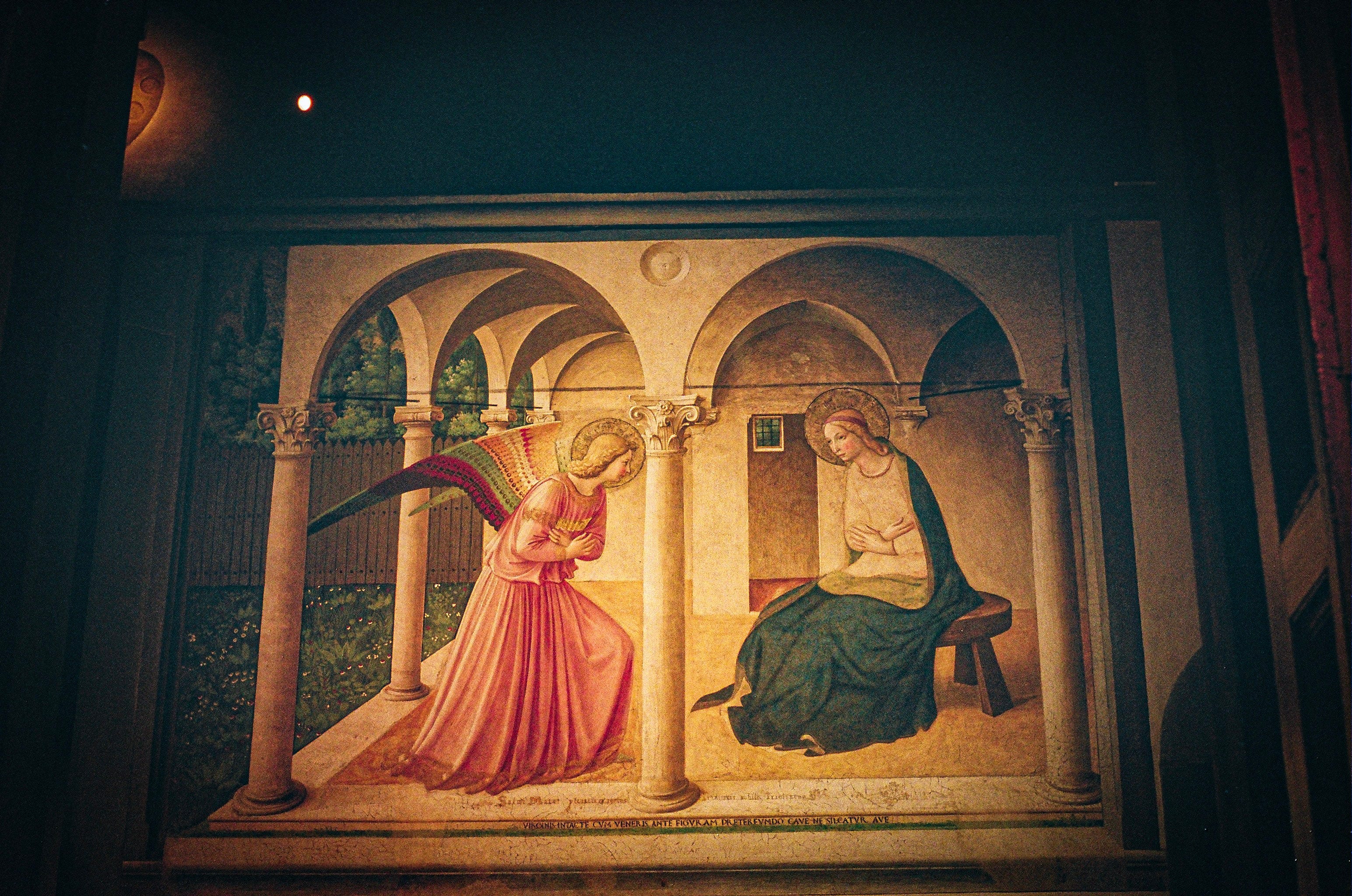
We almost stumbled into the Crucifixion, our minds halfway inside and halfway out. James was right; one feels an obligation to pay attention to its beauty. Walking out quickly is not an option. After this, you head up the stairs to the floor with the dormitories where the Friars lived. At the top of these stairs is an Annunciation, with the Angel Gabriel’s wings glittering, reaching out to Mary as Fra Angelico is reaching out to us. We are fully inside now. From here we explore the small cells where the Friars lived, each decorated with a fresco, each designed to connect the Friars to their raison d’etre.
That night we had our best meal, still high on our day’s evacuation from normal space and time. Not even the fact that we had to get up before 7 am the next day dampened our spirits.
We rose early to catch a train to Padua. On the train we passed around Ruskin like a guide to glory. Unlike San Marco, Scrovegni is tightly held by its protectors. You have to make a reservation months in advance, and you only get 15 minutes inside per reservation. Our group was split up into several different 15 minute blocks.
Primed as we were by the previous day’s experience, we were all hungry to look, and tried to vacuum in as much visual information as possible in our 15 minutes. This is difficult given the sheer explosion of paint, the electric lapis lazuli spread over so much of the surface, Ruskin’s alethic vapor pouring forth. Unlike in San Marco, you are intensely aware of time while in the chapel, wishing for it to stretch out. You take in as much as you can before the old man gently pushes you out, almost looking pained at having to do it once again.
The thing about communion is that it’s impossible to feel alone when you’re communing. It is also impossible to indulge in skepticism about the power of these pictures to tell you something when you are part of a group that is hearing the same music, talking to the same dead, and, perhaps most importantly, feeling, talking, and singing together.
I have been lucky enough to experience a lot of beautiful things in a variety of different ways—with family, best friends, in solitude. The experiences I had on this trip were unique. To travel with such an explicit humanistic aim with a group of intelligent students was always going to be interesting. That was nothing compared to the joy of traveling with students genuinely open to what they might find, students who were listening for the music, who wanted to share it, share in it. Plato, in the Symposium, elucidates a theory of engagement with beauty whereby beauty is self-perpetuating. By engaging with beauty properly, one creates beauty. That is what happened on this trip.
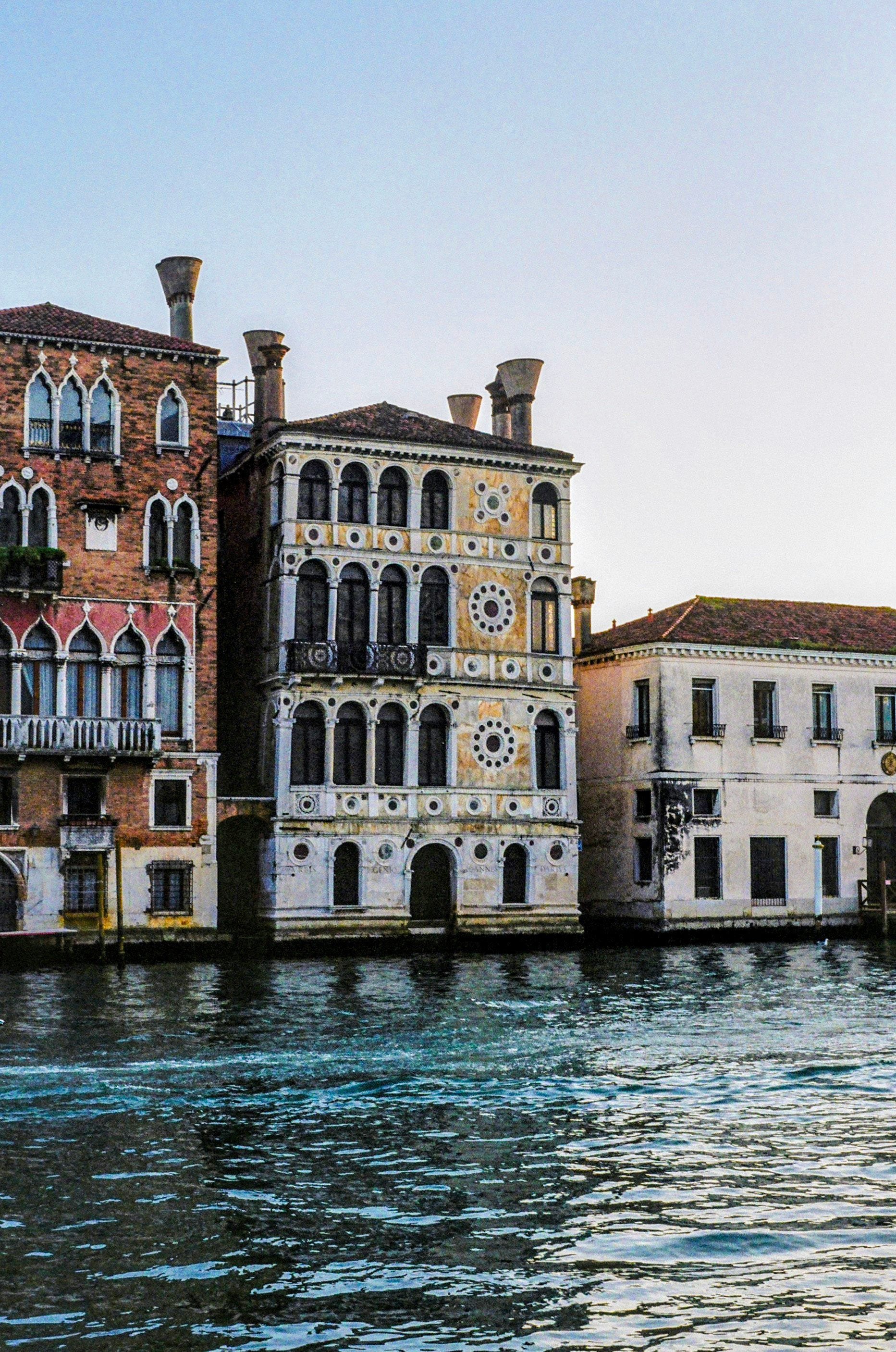
For all of his cynicism, Twain was not totally cut off from the music. He was not there just to make fun of his countrymen’s delusions of grandeur. Sometimes communion found them, as he writes about their time in Venice.
We have seen, in these old churches, a profusion of costly and elaborate sepulchre ornamentation such as we never dreamt of before. We have stood in the dim religious light of these hoary sanctuaries, in the midst of long ranks of dusty monuments and effigies of the great dead of Venice, until we seemed drifting back, back, back, into the solemn past, and looking upon the scenes and mingling with the peoples of a remote antiquity. We have been in a half-waking sort of dream all the time. I do not know how else to describe the feeling. A part of our being has remained still in the nineteenth century, while another part of it has seemed in some unaccountable way walking among the phantoms of the tenth.
Duchamp took a toilet and made it art. He made this toilet sing, spurring love (and hate), changing lives. How? Why? What is it that it sings?
You tell me.